
Dry Ice Cleaning for Food Processing Industry
Effectively clean food production equipment in-place without disassembly, water, or harsh chemicals
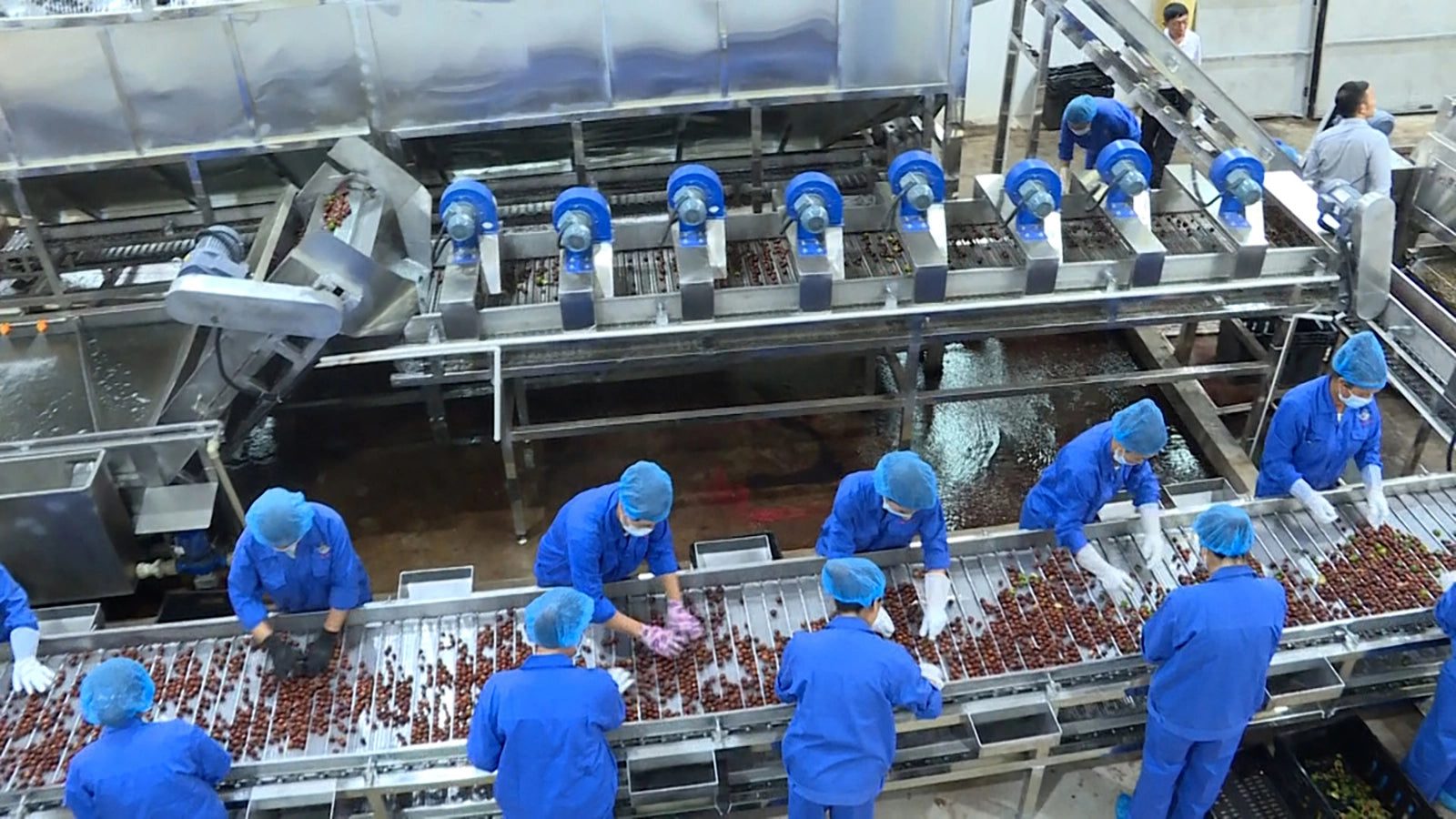
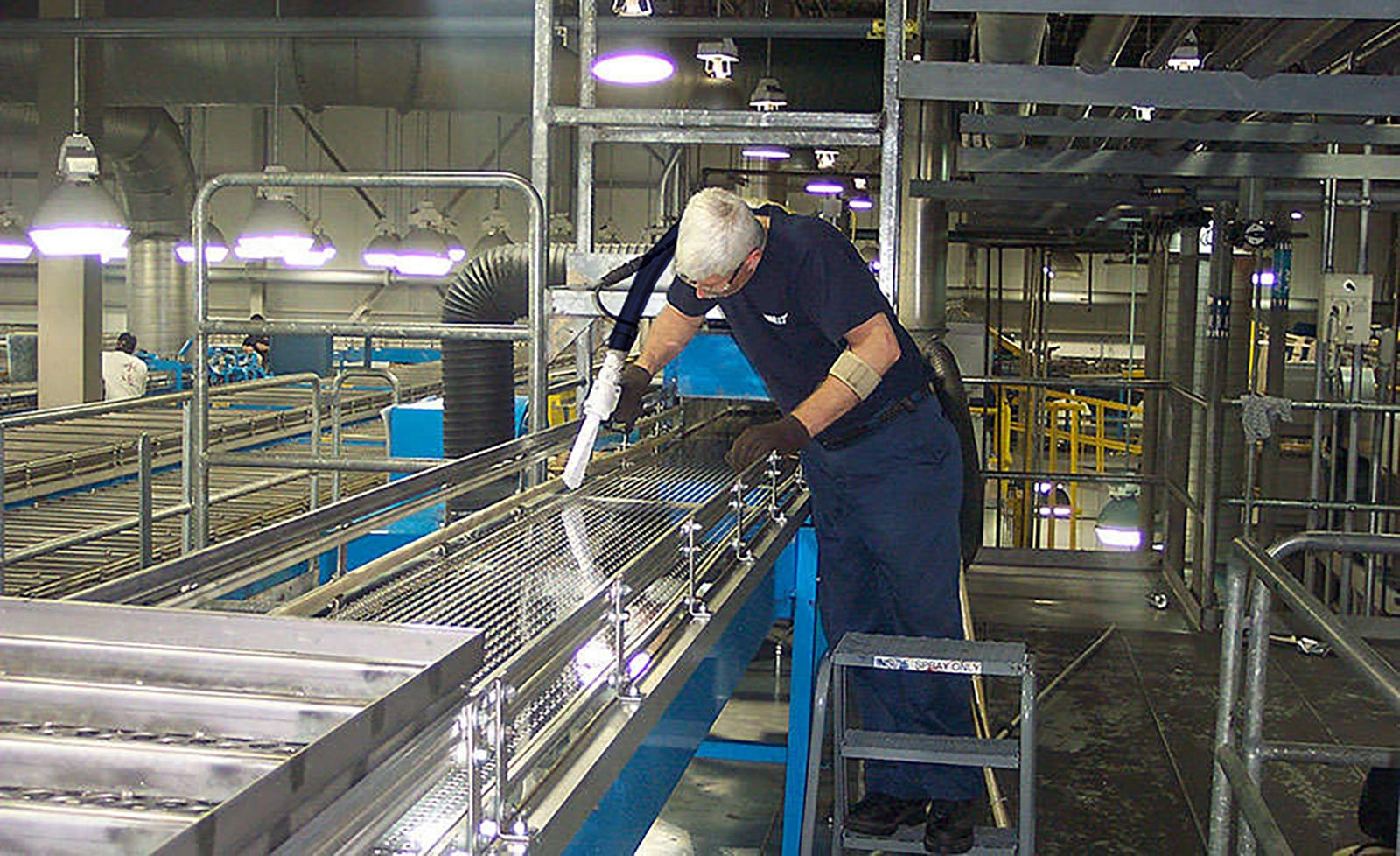
Why food producers are switching from water and chemical cleaning
Dry ice blasting cleans equipment in place, dry — no moisture, no chemicals, no residue.
- Added moisture that can encourage bacteria and mold
- Chemical residue and extra rinsing steps
- Water near motors, sensors and wiring
- Long drying time and production downtime
- Heavy manual scrubbing on baked-on residue
- Dry process — no added moisture for microbes
- No chemicals or secondary residue to rinse
- Clean equipment in place, with less disassembly
- Non-abrasive on seals, molds and sensors
- No drying time — faster return to production
What it cleans
- Ovens & baking equipment
- Conveyor belts
- Packaging machinery
- Mixers & blenders
- Molds & tooling
- Freezers & chillers
- Smokehouses
- Extruders
- Motors & control panels
- Seals & gaskets
- Production lines
- …and more
See it in action below ↓


-

Mold cleaning
Dry ice cleaning eliminates the need for chemicals and water, thoroughly removing residues from food factory molds without causing damage—delivering a faster, safer clean that helps maintain mold hygiene and prolongs equipment lifespan.
-

Acid-alkali film cleaning
Dry ice cleaning effectively removes oil and stains from acid and alkali resistant films without damage, minimizes downtime, and maintains surface integrity—ensuring optimal performance and extended material life.


Find your setup in 4 questions
Get a machine, compressor guidance, a dry ice plan and an estimated starting price.
What are you mainly cleaning?
Your typical cleaning scale?
Air compressor?
How often will you use it?
Your recommended setup
- ⚙️Machine
- 💨Air compressor
- 🧊Dry ice plan
- ✅Best for
Estimated setup
Compressor sold separately — read the air compressor guide. Dry air treatment (dryer / separator) is required for stable blasting.
Getting set up is simple
Four steps from delivery to your first blast — plus what to have on hand.
- 1Connect air
Compressor and dry-air line to the machine.
- 2Load dry ice
3 mm pellets into the 44 lb hopper.
- 3Blast
Pellets vanish on impact, lifting grease and baked-on residue.
- 4Back in production
No water, no residue, no drying time.

What you'll need to run it
Air compressor
AI30 / AI30 Plus: 71–141 CFM.
AI50: 200–400 CFM.
Dry, clean air
A refrigerated dryer or moisture separator keeps pellets from freezing and clogging.
Dry ice pellets · 3 mm
Buy fresh locally, or make your own on demand with an AIP50 pelletizer.
How many cleanings until it pays for itself?
Dry ice cleaning saves labor and downtime on every sanitation cycle — here's a typical estimate.
Estimated payback
26 cleanings
If your plant already has a compatible air compressor, the AI30 can pay for itself in about 26 sanitation cleanings — from the labor and downtime saved every cycle.
4–6 hours of disassembly, scrubbing, rinsing & drying · line downtime · water & chemicals
Clean in place in about an hour · no water or chemicals · faster back to production
Estimates vary by equipment, soil level, local dry ice price, labor cost and downtime value. Use as a planning guide, not a guaranteed projection.
ThaiDelight Foods, Bangkok, Thailand
“Cleaning our equipment used to mean long shutdowns, heavy water usage, and strong chemicals — all while risking bacterial contamination. Since switching to dry ice blasting, we can clean conveyors, baking molds, and filling machines in place, with no disassembly, no water, no chemicals, and no residue. It’s faster, reduces downtime, and makes passing food safety audits much easier.”
— Somchai P., Production Manager
Frequently asked questions
Is dry ice cleaning safe for food production areas?
Yes. Dry ice sublimates into CO₂ gas on impact, leaving no water, chemicals or secondary residue. It's a recognized cleaning method in food and beverage processing and is used on ovens, conveyors, molds and packaging lines. Always follow your own HACCP and sanitation protocols.
Do I need an air compressor?
Yes — it's sold separately. AI30 / AI30 Plus have a machine airflow range of 71–141 CFM at 87–116 PSI. Compressor suitability depends on sustained CFM at working pressure, air treatment, hose length, nozzle choice and duty cycle. The AI30 Plus 26-ft hose may require additional pressure and airflow margin. For AI50, about 175 CFM is a practical lower reference, while 200–400 CFM is recommended for demanding jobs. HP and receiver tank size alone do not confirm compatibility. No compressor yet? See the AI30 + 20HP system.
Can I clean equipment in place, without disassembly?
In most cases, yes. Because the process is dry and non-abrasive, you can often clean ovens, conveyors and machinery in place — reducing teardown, downtime and reassembly between production runs.
Is it safe around motors, sensors and wiring?
Yes. With no moisture and no abrasive media, dry ice blasting is safe on electrical components, sensors, seals and gaskets. Start at lower pressure on sensitive surfaces and increase as needed.
Where do I get dry ice?
Buy fresh 3 mm pellets from a local CO₂ supplier before each shift, or make your own on demand with an AIP50 pelletizer and storage box.
Which model is right for my plant?
AI30 for ovens, molds and general equipment; AI30 Plus for conveyors, packaging lines and cleaning in place around large equipment; AI50 for heavy baked-on carbon and high-volume production lines. Not sure? Use the setup finder above.
Ready to bring dry ice cleaning to your plant?
Pick your machine, or talk to us about the right setup for your lines and sanitation schedule.
- ✓ 1-year warranty
- ✓ Free freight shipping
- ✓ US-based after-sales support
