
Dry Ice Cleaning for Molding Industry
Effectively clean molds in-place without disassembly, water, or harsh chemicals
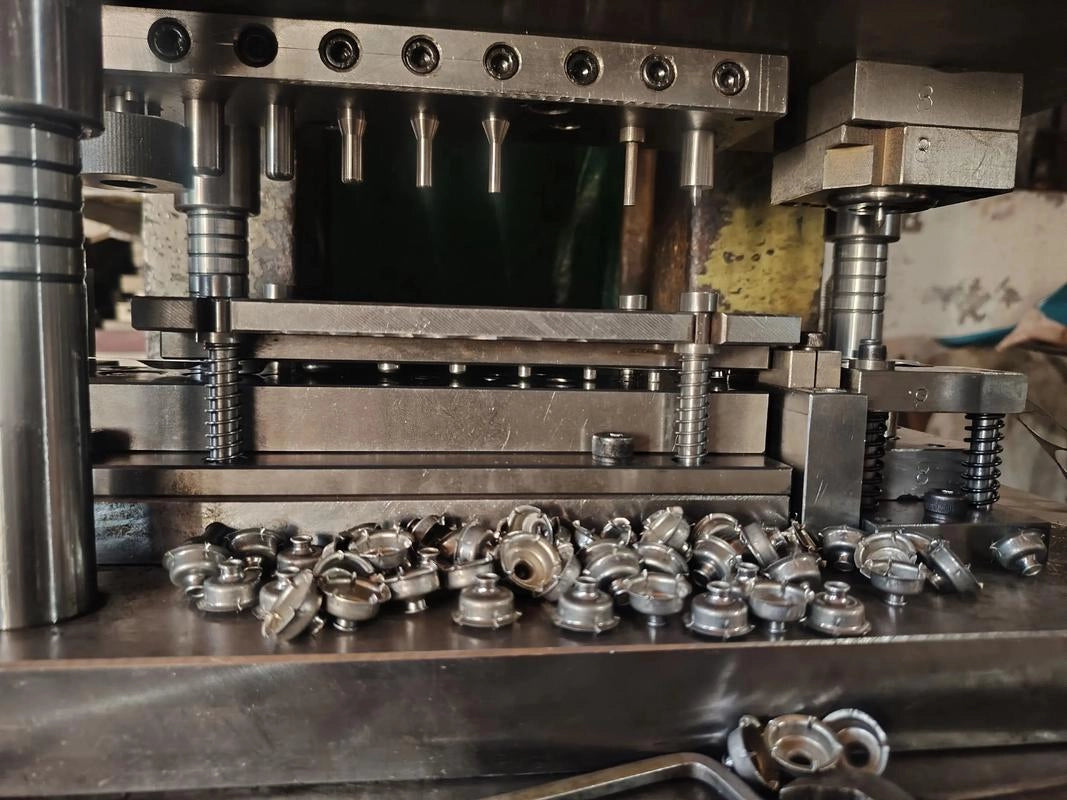
Why molders are switching from manual and solvent cleaning
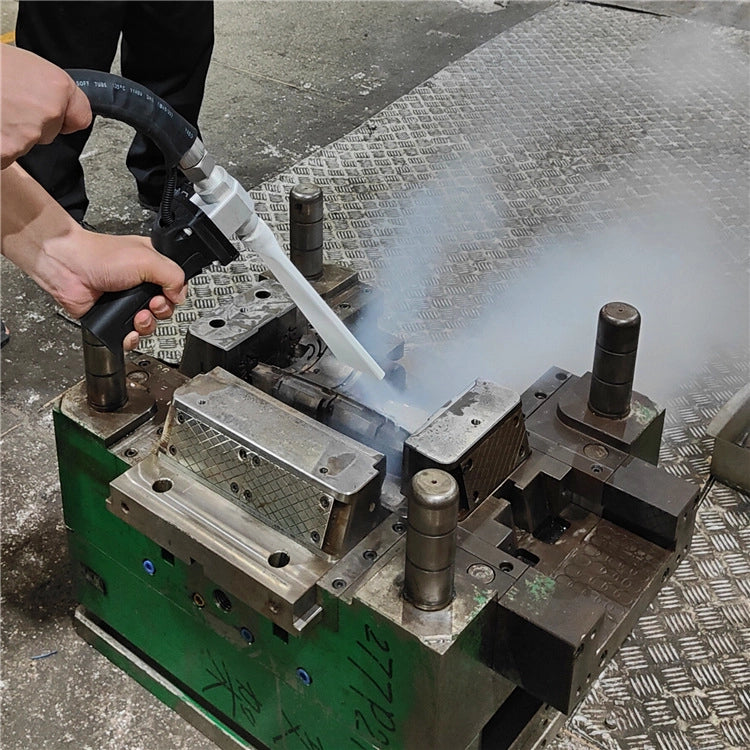
Dry ice blasting cleans molds in place — without scratching the tool or pulling it from the press.
- Mold pulled from the press — lost production time
- Abrasive media can wear cavities and vents
- Solvents, residue and disposal concerns
- Hard to reach vents, engravings and fine detail
- Hand scrubbing that risks damaging the tool
- Clean the mold hot, in place, without teardown
- Non-abrasive — preserves cavity precision
- No solvents or secondary waste — CO₂ sublimates
- Clears vents, engravings and fine detail
- No drying time — faster back to molding
What it cleans
- Injection molds
- Blow molds
- Compression molds
- Rubber & tire molds
- Die-cast tooling
- Mold vents
- Cavities & cores
- Engravings & textures
- Hot runners
- Ejector pins
- Release-agent buildup
- …and more
See it in action below ↓


-

Mold cleaning
Dry ice cleaning eliminates the need for harsh solvents and reaches into complex mold cavities, providing a faster, more precise clean without damaging surfaces—ideal for maintaining mold integrity and extending service life.
-

Mold cleaning
Dry ice cleaning maintains mold accuracy, reduces production interruptions, and lowers scrap rates—helping ensure consistent product quality and longer mold lifespan.


Find your setup in 4 questions
Get a machine, compressor guidance, a dry ice plan and an estimated starting price.
What are you mainly cleaning?
Your typical mold size?
Air compressor?
How often will you use it?
Your recommended setup
-
⚙️
Machine
-
💨
Air compressor
-
🧊
Dry ice plan
-
✅
Best for
Estimated starting price
Getting set up is simple
Four steps from delivery to your first blast — plus what to have on hand.
-
1
Connect air
Connect a compatible compressor and clean, dry compressed-air line to the machine.
-
2
Load dry ice
Load the compatible dry ice pellets into your machine.
-
3
Blast
Dry ice lifts release agents, residue and buildup from mold surfaces.
-
4
Back in production
A dry cleaning process means less post-cleaning cleanup before restart.

What you'll need to run it
Air compressor
AI10 Micro: 27–70 CFM
AI30 / AI30 Plus: 71–141 CFM
AI50: 175 CFM minimum; 200–400 CFM recommended
Always confirm sustained airflow at the required working pressure, not compressor horsepower alone.
Shop compressors → Air compressor guide → AI30 + 20HP system →
Clean, dry compressed air
Use clean, dry compressed air for stable blasting performance. Air-treatment requirements vary by machine, compressor type, humidity and operating conditions.
AI10 does not require a separate air dryer for basic operation. Higher-flow or humid-air setups may require additional moisture removal or cooling.
Dry ice
Use fresh dry ice compatible with your selected machine. Buy it locally, or make your own on demand for regular industrial use.
How many mold cleanings until it pays for itself?
Reducing teardown, press downtime and manual cleaning labor can lower the cost of each mold-cleaning cycle. Use the assumptions below to estimate potential payback.
Estimated payback
18 mold cleanings
Based on the assumptions below, the AI30 may recover its equipment cost in about 18 mold cleanings through estimated press-downtime and labor savings.
Dry ice cost is estimated at $1.50/lb. Actual local pricing and consumption vary by mold size, residue level and cleaning time.
May require mold teardown, hand cleaning and solvent use, with additional labor and press downtime.
Can reduce teardown and post-cleaning work, helping molds return to production sooner where the process is suitable.
Estimates vary by mold size, residue level, cleaning frequency, local dry ice price, labor cost, downtime value and operating conditions. This calculator is a planning tool only and does not guarantee savings or payback.
ToolPro Molding, Melbourne, Australia
“Cleaning our molds used to take hours and involved harsh chemicals that posed risks to both staff and equipment. Since switching to dry ice blasting, we can clean complex cavities and vents without disassembling anything. It’s a huge boost in efficiency and significantly reduces production interruptions.”
— Mr. Lin, Equipment Supervisor MoldTech Industries
Frequently asked questions
Will it scratch or wear my mold surface?
No. Dry ice is non-abrasive — the pellets sublimate into gas on impact, so they lift buildup without removing base metal. Unlike sand, glass bead or walnut media, it won't wear cavities, vents or fine engravings, so tool precision is preserved.
Can I clean the mold hot and in the press?
Yes — that's a key advantage. Because the process is dry, you can often clean molds hot and in place without pulling them from the press, cutting downtime between runs. Start at lower pressure and increase as needed.
Does it reach vents, engravings and fine detail?
Yes. With the right nozzle, dry ice blasting clears release-agent and residue buildup from vents, engravings, textures and tight cavities that are hard to reach by hand — without opening them up.
Do I need an air compressor?
Yes — it's sold separately. AI30 / AI30 Plus need 71–141 CFM at 87–116 PSI (10 HP+, 150 gal tank); AI50 needs an industrial screw compressor at 200–400 CFM. No compressor yet? See the AI30 + 20HP system.
Where do I get dry ice?
Buy fresh 3 mm pellets from a local CO₂ supplier before each job, or make your own on demand with an AIP50 pelletizer and storage box.
Which model is right for my shop?
AI10 Micro for small precision inserts, detailed tooling, and light residue where control matters most; AI30 for routine mold and tooling cleaning; AI30 Plus for large molds, in-press cleaning, and extended reach; AI50 for heavy carbon, rubber/tire molds, and high-output industrial work.
Ready to bring dry ice cleaning to your shop?
Pick your machine, or talk to us about the right setup for your molds and presses.
- ✓ 1-year warranty
- ✓ Free freight shipping
- ✓ US-based after-sales support
