
Dry Ice Cleaning for Printing Presses
Explore targeted dry ice cleaning for compatible printing press parts
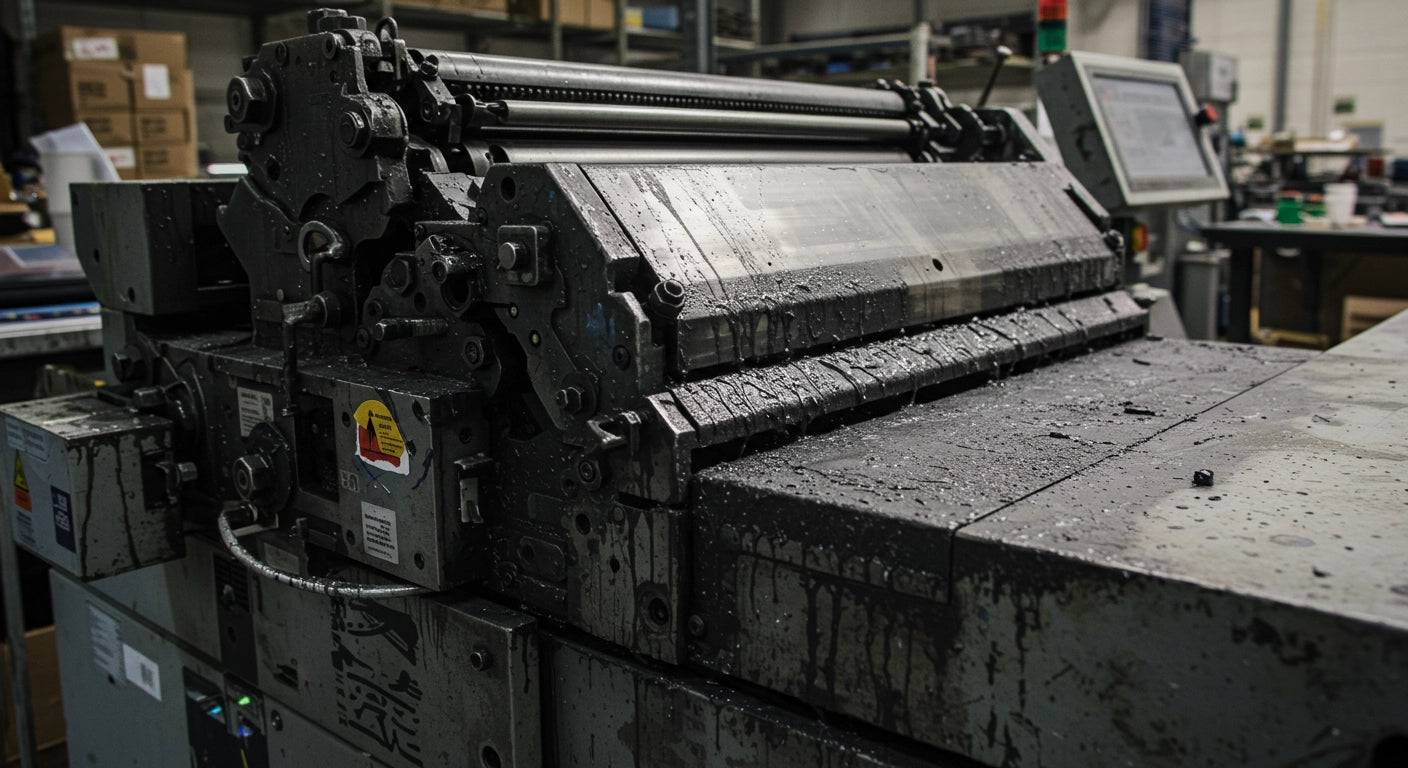
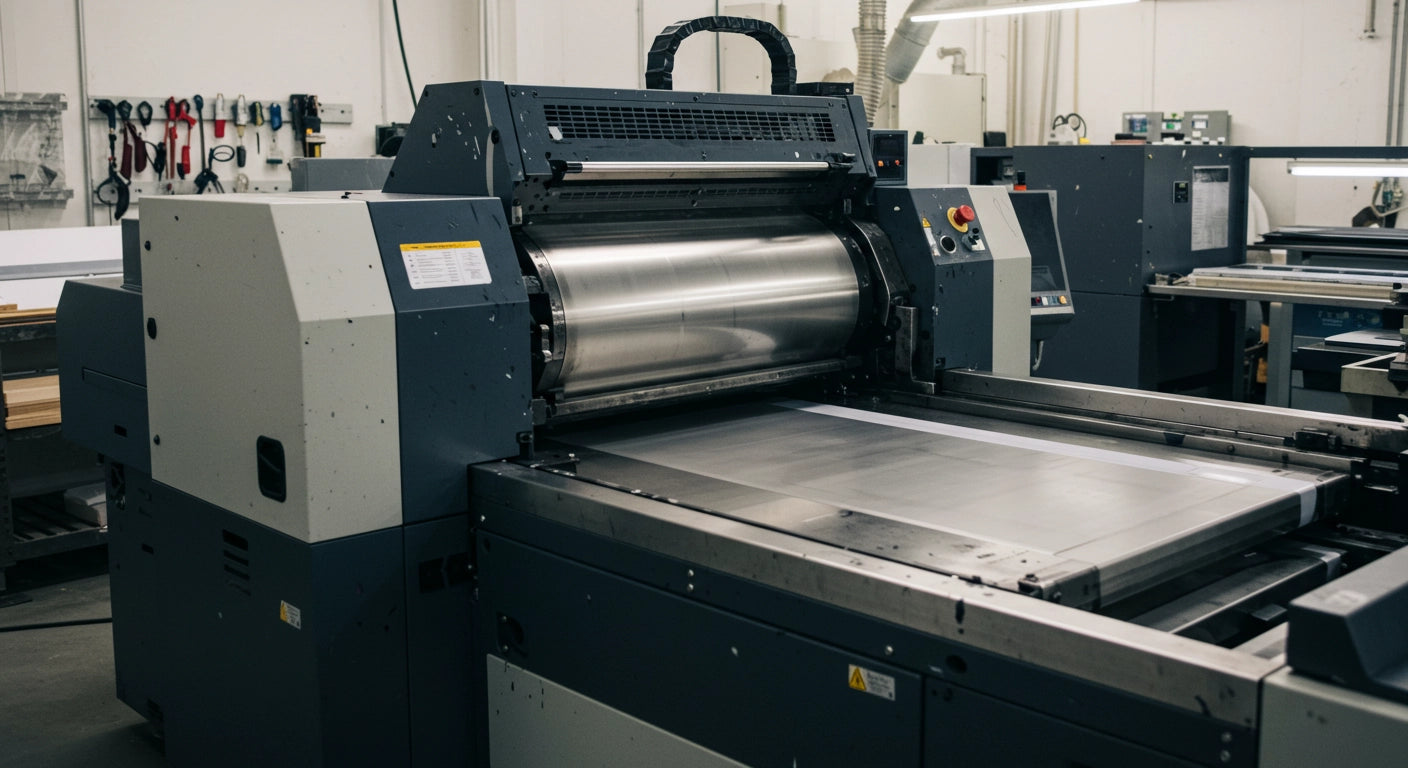
Why printers are switching from solvent and manual cleaning
For suitable metal frames, guards and accessible machinery, dry ice cleaning may reduce manual wiping and added wash water.
- Presses stripped down — lost production time
- Solvents that can swell or damage rollers
- Chemical fumes, residue and disposal concerns
- Hardened ink can be difficult to reach in machine corners
- Hand scrubbing dried ink, UV and adhesive
- Clean selected metal structures in place where approved
- No added grit; verify delicate coatings separately
- No added wash water or spent blasting media; collect removed deposits
- Reach selected frames, guards and mechanical details
- Potentially shorten a measured maintenance task
What it cleans
- Ink-station frames
- Selected metal housings
- Ink trays & fountains
- Accessible metal guards
- Drying units
- UV / LED ink buildup
- Adhesive & glue residue
- Press frames
- Guide rails & rollers
- Dryers & ovens
- Machine exteriors
- …and more
See it in action below ↓


Find your setup in 4 questions
Get a machine, compressor guidance, a dry ice plan and an estimated starting price.
What are you mainly cleaning?
Your typical press size?
Air compressor?
How often will you use it?
Your recommended setup
- ⚙️Machine
- 💨Air compressor
- 🧊Dry ice plan
- ✅Best for
Estimated setup
Compressor sold separately — read the air compressor guide. Dry air treatment (dryer / separator) is required for stable blasting.
Getting set up is simple
Four steps from delivery to your first blast — plus what to have on hand.
- 1Connect air
Compressor and dry-air line to the machine.
- 2Load dry ice
3 mm pellets into the 44 lb hopper.
- 3Blast
Pellets vanish on impact, lifting dried ink and adhesive.
- 4Back to press
No wash water added. Collect loosened residue and inspect before restart.

What you'll need to run it
Air compressor
AI30 / AI30 Plus: 71–141 CFM.
AI50: 200–400 CFM.
Dry, clean air
A refrigerated dryer or moisture separator keeps pellets from freezing and clogging.
Dry ice pellets · 3 mm
Buy fresh locally, or make your own on demand with an AIP50 pelletizer.
Will dry ice cleaning pay off in your press room?
Start with one approved cleaning task. Measure the full job, including access, protection, cleaning, cleanup and return to production.
Then compare a contractor's quote with equipment, compressed air, dry ice delivery and storage losses, training and maintenance. Count recovered press time only when it reduces real costs or allows profitable production.
See how to test the job and compare costsFrequently asked questions
Will it damage my anilox rollers or cylinders?
It may. Coated cylinders, rubber coverings and ceramic anilox surfaces require special care. Some anilox manufacturers advise against particle blasting. Follow the component maker's approved cleaning procedure before using dry ice.
Can I clean the press in place, without stripping it down?
Sometimes. Accessible metal frames, guards and housings may be suitable after the press is stopped and secured. Other components may require protection, disassembly or a different cleaning method.
Does it clear clogged anilox cells?
Do not assume so. Anilox cell geometry and ceramic coatings can be damaged by unsuitable blasting. Use the anilox manufacturer's recommended cleaning process for that specific roller.
Does it work on UV, water-based and solvent inks?
It may help remove compatible ink and adhesive deposits, depending on cure state, adhesion, surface and settings. Test on a manufacturer-approved component before choosing the blaster and nozzle.
Do I need an air compressor?
Yes — it's sold separately. AI30 / AI30 Plus have a machine airflow range of 71–141 CFM at 87–116 PSI. Compressor suitability depends on sustained CFM at working pressure, air treatment, hose length, nozzle choice and duty cycle. The AI30 Plus 26-ft hose may require additional pressure and airflow margin. For AI50, about 175 CFM is a practical lower reference, while 200–400 CFM is recommended for demanding jobs. HP and receiver tank size alone do not confirm compatibility. No compressor yet? See the AI30 + 20HP system.
Where do I get dry ice?
Buy fresh 3 mm pellets from a local CO₂ supplier before each job, or make your own on demand with an AIP50 pelletizer and storage box.
Ready to bring dry ice cleaning to your press room?
Pick your machine, or talk to us about the right setup for your presses and rollers.
- ✓ 1-year warranty
- ✓ Free freight shipping (contiguous U.S.)
- ✓ US-based after-sales support
