
5 Ways CO2 Cleaning Machine Revolutionize Food & Beverage Hygiene

Revolutionizing Food Processing Hygiene with CO2 Cleaning Machines
Chemical-Free and Waterless Cleaning for Maximum Efficiency
The food processing industry faces growing hygiene challenges. CO2 cleaning machines provide an effective solution. Solid CO2 pellets sublimate on contact and remove contaminants without chemicals or moisture. This technology improves food safety and reduces downtime.
How CO2 Cleaning Works
CO2 cleaning operates through a three-step process.
- Pellet acceleration, compressed air propels dry ice pellets at high speed
- Thermal shock, minus 78°C pellets loosen contaminants
- Sublimation, solid CO2 converts to gas and lifts residues
This method is effective for removing the following.
- Bakery ingredient residues
- Meat processing fats and proteins
- Dairy product buildup
- Packaging adhesive residue
Industry-Specific Applications
Production Line Maintenance
- Conveyor belt cleaning, three times faster than manual scrubbing
- Mixing vessel sanitation
- Slicing equipment degreasing
Packaging Systems
- Filling nozzle maintenance
- Sealing head cleaning
- Labeler residue removal
Compliance Areas
- USDA and FDA inspection preparation
- Allergen control protocols
- Organic certification maintenance
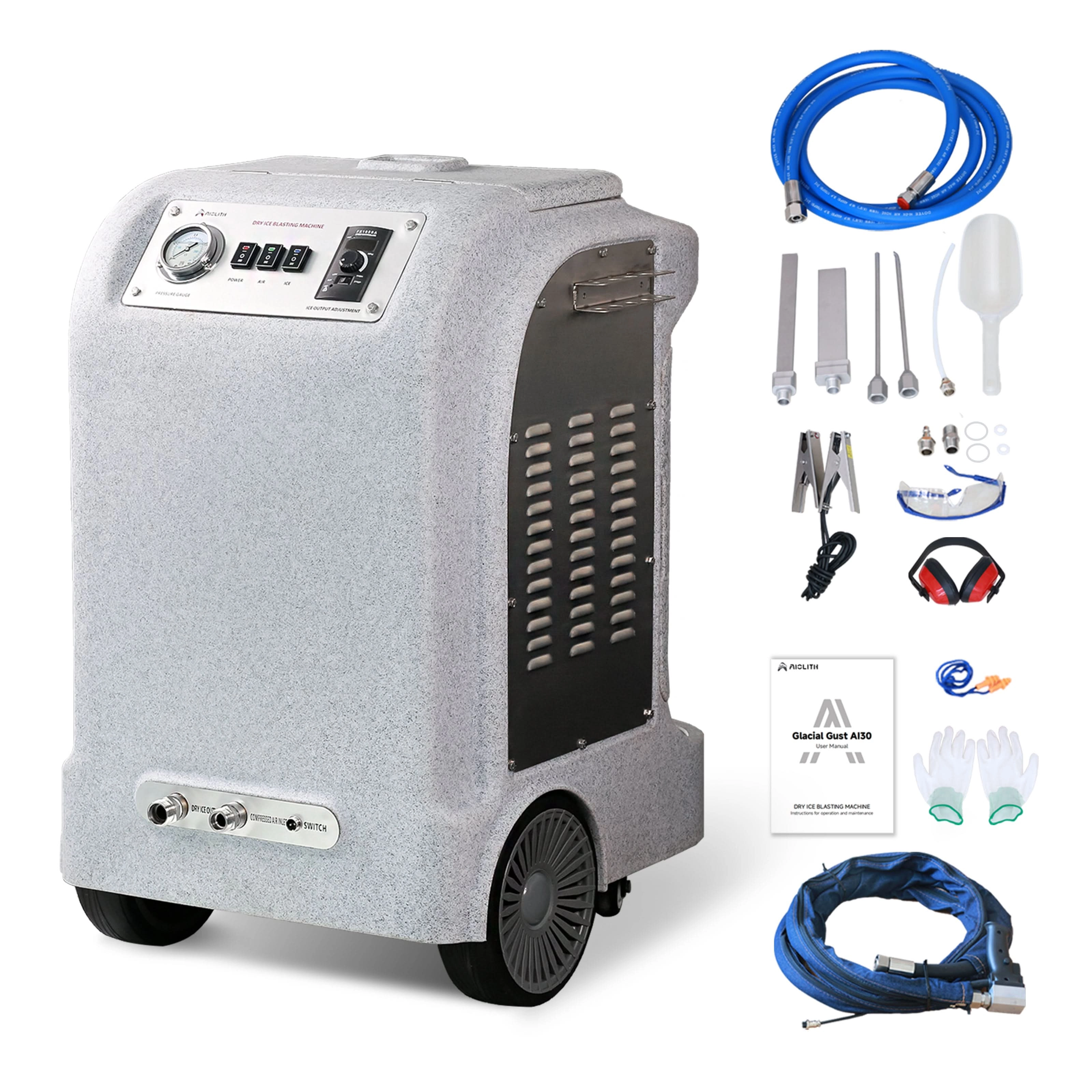
The Aiolith AI30 Advantage
Enhanced Efficiency
- 30 percent faster cleaning cycles compared to conventional systems
- 25 percent lower CO2 consumption through optimized pellet delivery
- Continuous eight hour operation for extended cleaning tasks
Food Safety Focus
- HACCP compliant design
- NSF certified components
- Allergen free cleaning process
Operational Benefits
- Quiet 78 dB operation, suitable for production environments
- 20 percent lower maintenance cost than industry average
- Compact footprint saving facility space
Comparative Cost Analysis
Industry evaluations show CO2 cleaning reduces downtime, maintenance cost, and compliance risks. The Aiolith AI30 improves food safety cleaning efficiency.
| Expense Category | Traditional Cleaning | CO2 Cleaning Machine | Savings |
| Labor Hours | 650 | 220 | 66 percent |
| Water Usage | 12,000 gallons | 0 gallons | 100 percent |
| Chemicals | 8,500 USD | 0 USD | 100 percent |
| Downtime | 290 hours | 90 hours | 69 percent |
| Equipment Wear | High | Minimal | 75 percent |
Implementation Considerations
Several factors should be evaluated before integrating CO2 cleaning systems.
Space Requirements
- Minimum 10 by 10 feet operating area
- 480V three phase power access
- Compressed air supply at 100 psi minimum
Training Protocols
- Two day operator certification
- Quarterly maintenance training
- Annual safety refresher sessions
ROI Timeline
- Typical payback period of eight to fourteen months
- Average equipment lifespan of seven to ten years
- Three year comprehensive warranty coverage
Future Developments
Next generation CO2 cleaning systems will introduce advanced technologies.
- AI assisted contamination detection
- Automated cleaning path programming
- IoT enabled performance monitoring
- Enhanced energy recovery systems
These developments will further improve efficiency and reduce operational costs in food processing environments.